

TL;DR:
- Effective SME financial management involves planning, monitoring, and controlling cash flow, budgets, and KPIs. Regularly updating forecasts, tracking key metrics, and engaging fractional CFOs help maintain solvency and support growth. Building disciplined financial habits prevents cash crises and ensures sustainable business success.
SME financial management is the process of planning, monitoring, and controlling a business’s financial activities to maintain solvency, drive profitability, and support sustainable growth. For small and medium-sized enterprises, this discipline separates businesses that scale from those that stall. The recognized benchmarks are clear: 3–6 months of cash reserves is the standard for financial health, and service-based SMEs typically target net profit margins of 5–25%. This managing SME finances guide covers every layer of that discipline, from reading financial statements to adopting rolling forecasts and fractional CFO support.
What are the core financial statements SMEs must track?
Every owner managing small business finances needs to read three documents fluently: the income statement, the balance sheet, and the cash flow statement. Each one tells a different part of the story. Together, they give a complete picture of financial health.
The income statement shows revenue, expenses, and profit over a period. The balance sheet shows what the business owns versus what it owes at a single point in time. The cash flow statement tracks actual money moving in and out, which is where most SME owners get surprised.
Profit and cash are fundamentally different. A business can show a healthy profit on its income statement and still run out of cash because customers pay late or inventory ties up funds. This distinction is the single most important concept in SME financial planning.
| Statement | What it measures | Key question it answers |
|---|---|---|
| Income statement | Revenue minus expenses | Are we profitable? |
| Balance sheet | Assets minus liabilities | What do we own and owe? |
| Cash flow statement | Cash in versus cash out | Can we pay our bills? |
| Gross margin KPI | Revenue minus cost of goods | How efficient is our core business? |
| Days sales outstanding (DSO) | Average days to collect payment | How fast do customers pay us? |
60% of SMEs lack formal financial plans and monitor only basic KPIs. That gap creates blind spots that compound over time. Best-in-class SMEs update their plans quarterly and track 5–7 KPIs consistently.
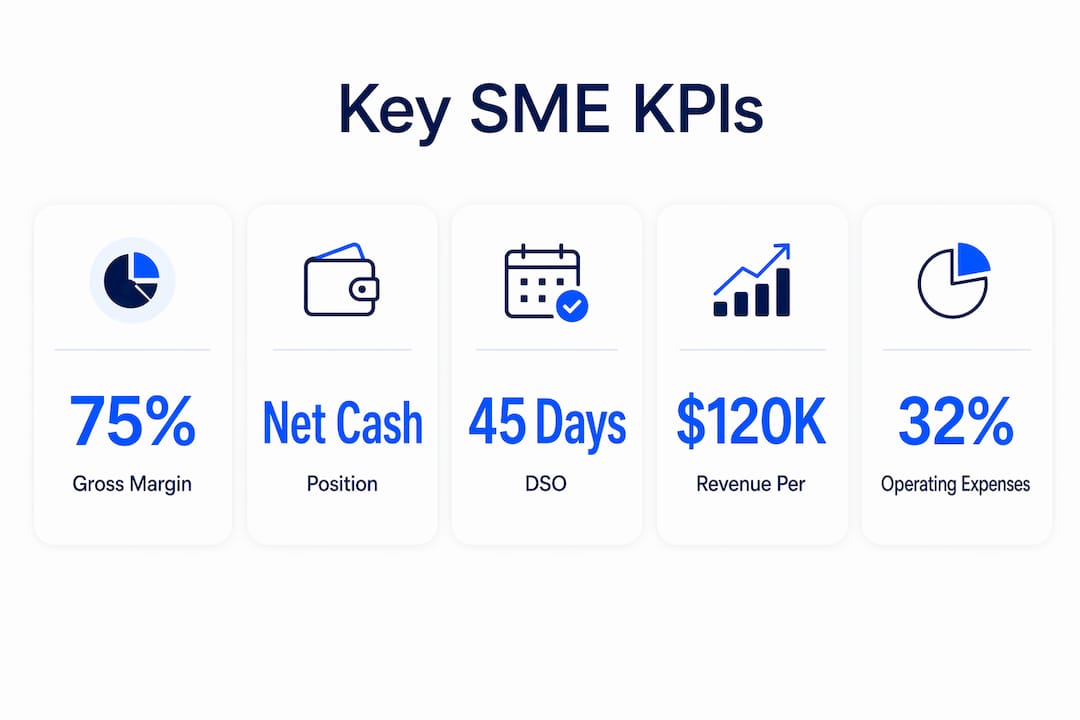
Pro Tip: Pick five KPIs and track them every month without exception. Gross margin, net cash position, DSO, revenue per employee, and operating expense ratio cover the full picture without creating data overload.
How to build budgets and cash flow forecasts for SME financial control
A budget and a cash flow forecast are not the same thing. A budget sets targets for revenue and spending over a period, usually 12 months. A cash flow forecast predicts the actual timing of money coming in and going out, week by week.
The 13-week rolling cash flow forecast is the industry gold standard for SME liquidity management. Updated every week, it gives owners a forward-looking view of cash shortfalls 2–3 weeks before they hit. That lead time is enough to act: delay a purchase, chase a payment, or draw on a credit line.
Building a budget starts with the last 90 days of actual data, not projections. Pull real revenue, real expenses, and real margins. Then layer in growth targets. This approach produces two distinct budgets that serve different purposes:
- Survival budget: Covers only fixed costs and minimum operating expenses. This is the floor. If revenue drops, you know exactly what you need to stay alive.
- Growth budget: Adds investment in sales, marketing, hiring, and tooling on top of the survival base. This is the ceiling you aim for when conditions are favorable.
Budgets work best as living monthly documents, not static annual plans. Reviewing actuals against budget every month catches drift early. Quarterly or annual reviews leave too much time for small problems to become large ones.
One expense category that many SMEs underbudget in 2026 is software and AI tooling. Subscription costs accumulate fast across accounting, communication, project management, and automation platforms. Add a dedicated line item for this category and review it monthly.
| Feature | Survival budget | Growth budget |
|---|---|---|
| Starting point | Fixed costs only | Full operating base |
| Revenue assumption | Conservative or flat | Ambitious but grounded |
| Investment included | Minimal | Sales, hiring, tooling |
| Review cadence | Monthly | Monthly |
| Primary purpose | Protect cash | Drive expansion |
What processes and digital tools boost SME financial efficiency?
Manual spreadsheets create two problems: they are slow to update, and they break when multiple people touch them. Cloud accounting tools provide real-time visibility, automated invoicing, and spending controls that catch issues before they escalate. Moving beyond spreadsheets is not about technology for its own sake. It is about getting accurate numbers faster.
The highest-impact process change most SMEs can make is automating accounts receivable. Set invoice reminders at 7, 14, and 30 days past due through your cloud accounting platform. This single habit reduces late payments without requiring manual follow-up every week.

A monthly finance review is the process anchor that holds everything together. Schedule it on the same day each month with a fixed agenda: cash position, margins, KPI dashboard, and budget variance. Monthly reviews with a set agenda consistently outperform quarterly or reactive checks. The regularity builds pattern recognition that no dashboard alone can replicate.
Two controls that prevent budget blowouts deserve specific attention:
- Spending caps: Set hard limits on discretionary categories like travel, software subscriptions, and contractor spend. Require approval above the cap.
- Contingency buffers: Add 5–10% for service businesses and 10–15% for product businesses on top of projected expenses. Budget overruns usually come from many small decisions, not one large mistake.
For owners who want deeper insight into integrated banking for SMEs, connecting your banking directly to your accounting system eliminates manual data entry and reduces reconciliation errors.
Pro Tip: Consistency beats sophistication every time. A simple process you run every month produces better results than a complex system you use twice a year.
When and how to engage a fractional CFO
A full-time CFO costs well above six figures annually in salary alone. A fractional CFO delivers the same strategic capability at a fraction of that cost, working part-time or on retainer. Fractional CFOs provide CFO-level planning, fundraising preparation, and financial modeling without the overhead of a full-time hire.
Knowing when to bring one in matters as much as knowing what they do. These are the clearest signals:
- Revenue is growing but cash is shrinking. This is a structural problem that requires modeling, not just better bookkeeping.
- You are preparing to raise funding or take on debt. Investors and lenders expect financial models, scenario analysis, and clean historical data.
- You are making a major decision. Acquiring a business, entering a new market, or signing a long-term lease all carry financial risk that needs expert analysis.
- Your accountant is reactive, not proactive. Tax compliance is not financial strategy. If your financial advisor only looks backward, you need someone who looks forward.
- You spend more than four hours a week on financial management. That time has a cost. A fractional CFO can take the work off your plate and do it better.
A good fractional CFO also builds the internal processes that outlast their engagement. They set up KPI dashboards, document the monthly review process, and train your team to maintain financial discipline independently. Checking a portfolio management checklist before engaging external financial help gives owners a useful framework for evaluating what gaps actually need filling.
Key Takeaways
Disciplined cash flow forecasting, monthly budget reviews, and a focused set of KPIs form the foundation of effective SME financial management.
| Point | Details |
|---|---|
| Cash reserve target | Maintain 3–6 months of operating expenses as a financial safety buffer. |
| Rolling forecast cadence | Update a 13-week cash flow forecast weekly to spot shortfalls 2–3 weeks ahead. |
| KPI discipline | Track 5–7 KPIs monthly, including gross margin, DSO, and net cash position. |
| Budget as a living document | Review actuals against budget every month, not quarterly, to catch drift early. |
| Fractional CFO trigger | Bring in fractional CFO support when revenue grows but cash shrinks, or before fundraising. |
What I’ve learned about financial discipline in small businesses
Most SME owners treat financial management as a task they do when something goes wrong. That reactive posture is the root cause of most cash crises I have seen. The businesses that stay solvent through difficult periods are the ones that run their numbers on a schedule, not on a feeling.
The biggest mindset shift is treating your monthly finance review the same way you treat a client meeting. It goes in the calendar. It has an agenda. It happens whether the numbers look good or not. Software does not create that discipline. You do.
Cash flow deserves more attention than profit, especially in the early years. A profitable business with poor collections can fail faster than a break-even business with tight cash management. Prioritize your SME cash flow practices before you worry about growing the top line.
Weekly cash huddles, even 15 minutes with your finance lead or bookkeeper, surface problems before they compound. Pair that with automated KPI tracking and you have a system that works without requiring heroic effort every month. The owners who build these habits early rarely face the liquidity crises that catch others off guard.
— dd
Demivolt tools that support SME financial control
Keeping your payment infrastructure accurate is as important as your budgeting process. Errors in bank account details cause payment failures, delays, and reconciliation headaches that cost real time and money.
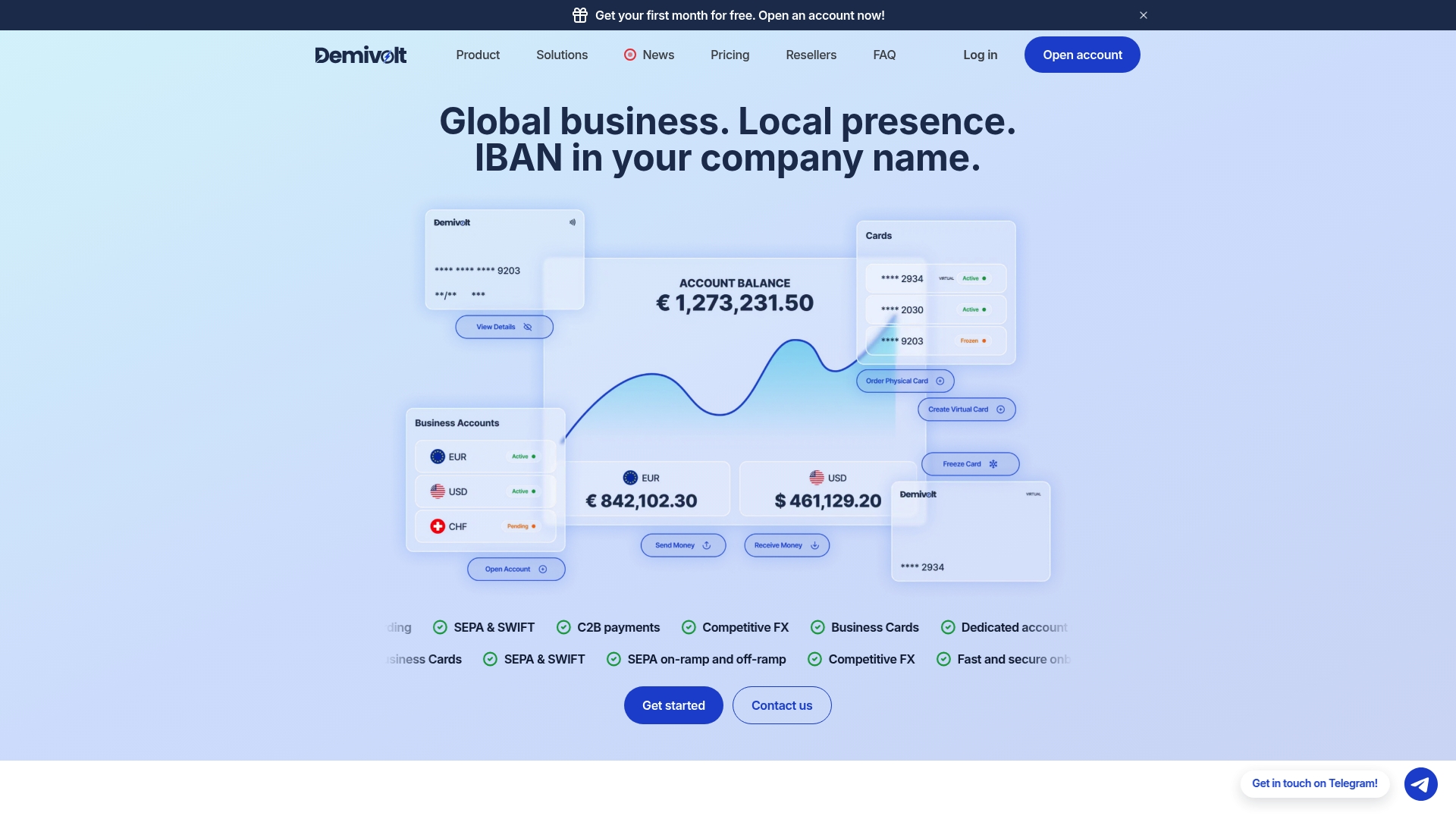
Demivolt offers free tools built specifically for SME financial accuracy. The IBAN validator checks international bank account numbers against the ISO 13616 standard before you send a payment, eliminating costly errors on cross-border transfers. Demivolt’s SEPA payment tools support faster domestic and European transactions, with dedicated IBAN accounts and role-based access that fits how modern SME finance teams actually work. For owners who want a complete picture of what Demivolt’s business banking infrastructure covers, the financial control overview is a practical starting point.
FAQ
What is the recommended cash reserve for an SME?
The standard is 3–6 months of operating expenses held as a cash reserve. This buffer covers payroll, rent, and fixed costs during revenue downturns without requiring emergency debt.
How often should SMEs update their cash flow forecast?
Update a rolling 13-week cash flow forecast every week. Weekly updates give you 2–3 weeks of advance warning before a cash shortfall hits, which is enough time to act.
What KPIs should a small business track monthly?
Track gross margin, net cash position, days sales outstanding, revenue per employee, and operating expense ratio. Five to seven KPIs updated monthly give a complete picture without creating reporting overload.
When does an SME need a fractional CFO?
Bring in a fractional CFO when revenue is growing but cash is shrinking, when you are preparing to raise funding, or when major financial decisions require scenario modeling beyond basic bookkeeping.
What is the difference between a budget and a cash flow forecast?
A budget sets revenue and spending targets for a period, usually 12 months. A cash flow forecast predicts the exact timing of money in and out, week by week, and is the more urgent tool for day-to-day liquidity management.