

Cross-border payments should be simple. But for many European SMEs, SWIFT transfers come loaded with unexpected fees, multi-day delays, and compliance headaches that eat into margins and strain vendor relationships. The good news is that most of these problems are avoidable. This guide walks you through the essential criteria for efficient SWIFT payments, breaks down message types, explains real-world speed expectations, and gives you a practical decision framework so your team can move money internationally with confidence and control.
Table of Contents
- Key criteria for efficient SWIFT payments
- Understanding SWIFT payment types: MT vs ISO 20022
- SWIFT speed and cost: How fast is ‘instant’?
- Practical workflow: Avoiding errors, compliance snags, and ‘last-mile’ failures
- Decision guide: When to use SWIFT, SEPA, or a fintech platform
- Why ‘real-time’ SWIFT is a myth and how SMEs should really decide
- Take control of your global payments with Demivolt
- Frequently asked questions
Key Takeaways
| Point | Details |
|---|---|
| Define payment criteria | Clarify speed, transparency, and compliance needs before initiating cross-border SWIFT payments. |
| Match message type to use case | Choose the proper SWIFT message type or ISO 20022 for accuracy and ease of reconciliation. |
| Beware last-mile bottlenecks | Most SWIFT delays happen at the final local processing stage, not in the cross-border network. |
| Consider alternatives for EUR | Use SEPA or approved fintechs for intra-Eurozone transactions when available. |
| Avoid compliance errors | Thoroughly validate recipient data to prevent payment failures and regulatory flags. |
Key criteria for efficient SWIFT payments
Before your finance team initiates a single SWIFT transfer, you need a clear decision framework. Without one, you’re essentially guessing, and that costs money. Here are the core criteria every European SME should evaluate:
- Payment urgency. Is same-day arrival critical, or can you trade speed for lower cost? Knowing this upfront prevents overpaying for priority routing when a standard transfer would do.
- Transparency and tracking. Can you see exactly where your payment is at any moment? SWIFT gpi (Global Payments Innovation) provides end-to-end tracking, so you can spot delays and communicate proactively with your bank. SWIFT payments take 1 to 5 business days, but gpi significantly improves both speed and visibility.
- Compliance readiness. Are you collecting the correct beneficiary details, running sanctions screening, and meeting your local regulatory requirements? Missing a field can freeze a payment entirely.
- Data richness. ISO 20022 messaging carries structured, detailed data that makes reconciliation and regulatory reporting far easier. If your banking partner still uses legacy formats, you’re leaving efficiency on the table.
- Cost optimization. Intermediary banks each take a handling fee. Structuring payments to minimize the number of correspondent banks in the chain directly reduces your costs.
Pro Tip: Activate SWIFT gpi tracking through your banking platform. It lets you pinpoint exactly where a payment is sitting, which intermediary is holding it, and whether a compliance query has been raised. This turns a frustrating “where is my money?” call into a two-minute check.
For broader business banking tips on managing international cash flow, it helps to pair this criteria framework with a reliable digital-first banking partner that supports gpi natively.
Understanding SWIFT payment types: MT vs ISO 20022
With a criteria-based approach in place, let’s break down the different SWIFT payment types your SME might need.
SWIFT messages aren’t one-size-fits-all. Choosing the wrong type can trigger compliance queries or cause your payment to be returned. Here’s what you need to know:
| Message type | Use case | Key feature |
|---|---|---|
| MT103 | Single customer credit transfer | Direct payment between businesses or individuals |
| MT202 | Bank-to-bank settlement | Used for interbank transfers, not customer payments |
| pacs.008 (ISO 20022) | Customer credit transfer (new standard) | Rich structured data, better reconciliation |
The key SWIFT message differences matter more than most SMEs realize. Using an MT202 for a customer payment, for example, can create a compliance gap because it doesn’t carry the same beneficiary detail requirements as an MT103.
ISO 20022 is the new global standard, and migrating to ISO 20022 is no longer optional for businesses that want to stay ahead. The pacs.008 format carries richer party data, which means faster KYC checks, cleaner reconciliation, and fewer compliance holds.
Common errors that cause delays include:
- NOTPROVIDED entries. Leaving required fields with a placeholder instead of real data is a red flag for compliance teams.
- Duplicate ultimate party data. Repeating the same party in multiple fields when they serve different roles confuses automated screening systems.
- Field mismatches. A name that doesn’t exactly match the account holder on record can trigger a manual review.
Pro Tip: Start using SWIFT message types that are ISO 20022-ready now, even if your bank still processes them as MT messages on the back end. Building clean data habits early means far fewer queries when the full migration completes.
SWIFT speed and cost: How fast is ‘instant’?
Choosing the right message type is just part of the story. How fast will your payment really arrive, and what does it cost?
The honest answer is: it depends. Standard SWIFT transfers take 1 to 5 business days. But SWIFT gpi has changed the picture significantly. 75% of gpi payments reach the beneficiary bank within 10 minutes. That’s a remarkable improvement, but it’s not the whole story.
“The last mile is where payments go to slow down. Local bank processing after the payment arrives in the destination country accounts for the majority of total transfer time.”
Trade finance transactions are a good example. Even with gpi, complex documentary payments can take 4 to 10 days because they involve manual review steps that no messaging standard can automate away.
| Payment method | Typical speed | Relative cost | Coverage |
|---|---|---|---|
| SWIFT (standard) | 1 to 5 business days | Medium to high | Global |
| SWIFT gpi | Minutes to 24 hours | Medium | Global |
| SEPA Credit Transfer | Same day to 1 day | Low | Eurozone |
| Fintech platform | Minutes to hours | Low to medium | Selected corridors |
SWIFT handles 44.8 million messages daily, with over $300 billion moving through gpi. That scale is impressive, but scale doesn’t automatically mean speed for your specific payment. Local cut-off times, national holidays, and the number of intermediary banks all affect cross-border payment speed in ways that the headline gpi statistics don’t capture.
The last-mile processing bottleneck is the most underappreciated factor in international payment delays. Your payment can travel across three continents in minutes and then sit in a local processing queue for two days.

Practical workflow: Avoiding errors, compliance snags, and ‘last-mile’ failures
After understanding speed and cost, actionable workflow fixes can determine your success with SWIFT payments.
Most SWIFT payment failures are preventable. The root cause is almost always data quality. Incorrect party data or mismatched fields cause the majority of compliance delays and returned payments. Here’s a step-by-step workflow to get it right:
- Validate beneficiary and ultimate party data. Confirm the full legal name, account number, IBAN, and BIC before submission. Cross-check against the invoice or contract.
- Use bank-approved templates. Pre-filled templates for recurring counterparties eliminate manual entry errors and speed up processing.
- Run sanctions screening. Check beneficiary names and countries against current sanctions lists before every payment. This is non-negotiable for compliance in SWIFT payments.
- Review your ISO 20022 structure. If your platform supports it, verify that all required fields are populated with real data, not placeholders.
- Check intermediary bank schedules. National holidays and local cut-off times in the destination country can add a full business day to processing. Build this into your payment timeline.
Common error sources to watch for:
- NOTPROVIDED entries in required fields
- Duplicate ultimate party information across message fields
- Name mismatches between payment instruction and account records
Pro Tip: Build a standardized payment checklist and attach it to your accounts payable process. Pre-filling forms for known counterparties and running a two-person review for high-value transfers can reduce SWIFT errors by a significant margin without adding meaningful time to your workflow.
Decision guide: When to use SWIFT, SEPA, or a fintech platform
You’ve seen how to optimize for accuracy and compliance, so here’s how to choose the right payment rail for your situation.
Not every international payment needs SWIFT. Choosing the right rail based on your specific corridor, urgency, and compliance requirements saves both time and money. For EU SMEs, the general rule is: use SWIFT gpi when it’s the only option, SEPA when you’re paying in euros within Europe, and a fintech platform when speed and cost matter most for supported corridors.
| Payment rail | Best for | Speed | Cost | Compliance |
|---|---|---|---|---|
| SWIFT gpi | Global, non-EUR, bank-required | Minutes to 5 days | Higher | Full audit trail |
| SEPA | Intra-Eurozone EUR payments | Same day | Very low | EU regulated |
| Fintech platform | Supported corridors, speed-critical | Minutes to hours | Low to medium | Platform-dependent |
Use this checklist when making your decision:
- Is the payment in EUR within the Eurozone? Use SEPA. It’s faster and cheaper.
- Does the recipient’s bank require SWIFT? Use SWIFT gpi and enable tracking.
- Is the corridor supported by a fintech platform? Compare fees and settlement times before defaulting to SWIFT.
- Is there a compliance or regulatory requirement for full bank rails? SWIFT is your answer.
- Is fee transparency critical? Fintech platforms typically offer fixed or clearly disclosed fees, while SWIFT correspondent chains can add unpredictable deductions.
The goal is choosing global payment rails strategically, not habitually. Many SMEs default to SWIFT for every international payment simply because it’s familiar, even when SEPA or a fintech solution would be faster and cheaper.
Why ‘real-time’ SWIFT is a myth and how SMEs should really decide
The marketing around SWIFT gpi has done something useful and something misleading at the same time. It’s useful because it raised the bar for speed and transparency. It’s misleading because it created the impression that SWIFT payments are now essentially instant. They’re not, and SWIFT gpi isn’t true real-time, especially for trade finance and complex payment structures.
Here’s the uncomfortable reality: payment speed is only as fast as the slowest local leg. You can have the best gpi-enabled bank in Europe, and your payment can still sit in a queue at a regional bank in Southeast Asia for 48 hours. No amount of messaging innovation fixes that without local infrastructure change.
The smarter approach isn’t to chase a single “best” payment method. It’s to build a payment stack. Use SEPA for euro payments within Europe. Use a fintech platform for corridors where it’s fast and transparent. Use SWIFT gpi for everything else, and set realistic expectations with your vendors and partners about intermediary delays. Educating your counterparties about why a payment might be held at the local processing stage prevents relationship damage and unnecessary escalations.
Maintain active relationships with both a traditional bank and a digital-first platform. Each covers the other’s gaps, and having both available means you’re never stuck waiting for a single provider to resolve an issue.
Take control of your global payments with Demivolt
Ready to upgrade your global payments process? Managing SWIFT, SEPA, and fintech payments across multiple corridors doesn’t have to mean juggling multiple platforms or chasing your bank for status updates.
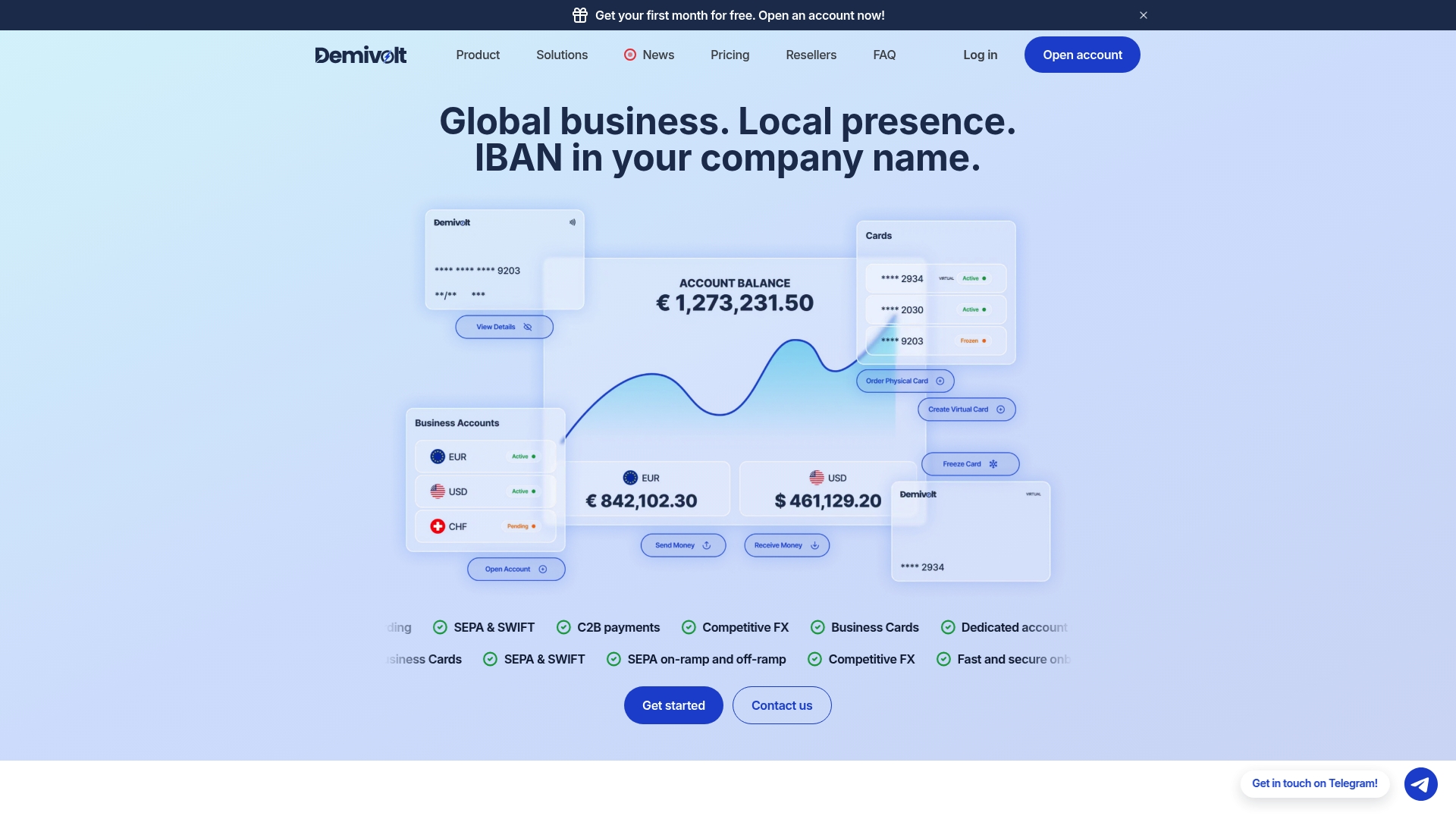
Demivolt for business banking gives European SMEs a single regulated platform to manage inbound and outbound payments, including SEPA (with SWIFT support planned), with full visibility and compliance support built in. You get dedicated IBAN accounts, role-based access for your finance team, and the transparency you need to reconcile payments without the back-and-forth. If you’re serious about cutting payment delays and controlling costs across borders, Demivolt is built for exactly that.
Frequently asked questions
How long does a SWIFT payment take to clear?
Most SWIFT payments take 1 to 5 business days to clear, but 75% of payments using gpi reach the beneficiary bank within 10 minutes. The remaining time is usually local processing at the destination.
What information is required for a SWIFT payment?
You need the full legal name, IBAN, BIC, and correct ultimate party data for the beneficiary. Incorrect party data or NOTPROVIDED entries are the leading cause of compliance delays and returned transfers.
Is SWIFT always the best option for international payments?
Not always. SWIFT is essential for global payments requiring full bank rails, but SEPA is faster and cheaper for intra-European EUR transfers, and fintech platforms often win on speed and cost for supported corridors.
What causes delays in SWIFT payments?
The biggest cause is last-mile local processing after the payment reaches the destination country. Local processing delays account for the majority of total transfer time, not the international routing itself.
How is ISO 20022 changing SWIFT payments?
ISO 20022 introduces richer, more structured data into payment messages, which means faster automated compliance checks and cleaner reconciliation. Migrating to pacs.008 reduces manual queries and supports better KYC processes across the payment chain.