

TL;DR:
- Managing multiple online accounts isolates risk and protects revenue by preventing one account’s failure from affecting others. Proper infrastructure separation, including proxies, device profiles, and payment credentials, is crucial for operational security and compliance across industries like e-commerce, social media, and affiliate marketing. SMEs should adopt multi-account strategies only when operational needs outweigh management complexity and document each account’s setup to ensure successful scaling.
Multi-account use cases in online business involve operating distinct accounts across platforms to distribute risk, segment audiences, and meet compliance requirements. This practice, formally called multi-account management, is standard across social media agencies, e-commerce sellers, affiliate marketers, and financial operations teams. Distributed presence limits the damage any single account suspension causes, protecting revenue across the portfolio. For SME owners, understanding which use cases apply to your business is the first step toward building a structure that scales without breaking.

1. Online business multi-account use cases: what they are and why they matter
Multi-account management is the practice of running two or more separate online accounts to serve distinct operational purposes. The term covers everything from maintaining separate seller profiles on marketplaces to running isolated ad accounts for different product lines. The core driver is not convenience. Risk isolation is the primary reason businesses adopt multi-account structures, containing the “blast radius” when one account fails or gets restricted. A single account failure in a single-account setup can halt your entire operation.
Three industries lead adoption of multi-account strategies. Social media agencies manage client portfolios at scale. E-commerce sellers diversify across marketplaces and regions. Affiliate marketers run parallel campaigns to test and scale faster. Each group uses the same core principle: separate accounts create separate risk environments, and separate risk environments protect the whole.
2. How social media agencies use multi-account strategies
Social media agencies operate 50–500 accounts to serve diverse client portfolios, making account isolation a daily operational requirement. Each client account must appear independent to the platform. Shared IP addresses or browser fingerprints link accounts together, triggering automated suspension systems.
The operational benefits go beyond risk management. Audience segmentation becomes precise when each account targets a distinct demographic or brand voice. A single agency can run a luxury fashion brand and a budget fitness brand from the same team without cross-contamination of content, tone, or audience data.
- Profile isolation: Each account runs through a dedicated proxy and a unique browser profile with distinct device fingerprints, including canvas data, fonts, and hardware settings.
- Workflow centralization: Unified dashboards matter more than raw technical access. Agencies that centralize scheduling, reporting, and approvals outperform those relying on manual tab-switching.
- Automation with randomization: Automation tools that record and replay workflows improve posting efficiency, but must use randomized timing to avoid velocity flags from platform detection systems.
- Session warmup: New accounts require gradual activity buildup before heavy posting begins. Rushing this step triggers platform scrutiny.
Pro Tip: Never reuse a browser profile across two client accounts, even temporarily. One shared session is enough for a platform’s detection system to link the accounts permanently.
3. What are the multi-account use cases for e-commerce sellers?
E-commerce businesses maintain 10–100 storefronts targeting different regions, product categories, or customer segments. Each storefront operates as an independent business unit with its own pricing strategy, inventory pool, and customer service identity. This structure protects revenue when one marketplace changes its algorithm or suspends a seller account.
Platform policy compliance is the most critical operational challenge. Marketplaces prohibit sellers from operating multiple accounts under the same legal entity without explicit approval. Sellers who ignore this face permanent bans across all accounts. The solution is account isolation at every layer: separate email addresses, separate payment credentials, separate IP addresses, and separate device profiles.
| Isolation layer | What to separate | Risk if shared |
|---|---|---|
| Network | Dedicated proxy per account | IP-based account linking |
| Payment | Unique virtual card per storefront | Financial fingerprint match |
| Device | Distinct browser profile | Device fingerprint clustering |
| Identity | Separate email and phone | Direct account association |
- Regional pricing control: Separate storefronts let sellers set prices independently per market without triggering cross-market arbitrage complaints.
- Inventory risk management: A product recall or stock-out on one storefront does not affect others.
- Platform diversification: Selling on multiple marketplaces simultaneously reduces dependency on any single platform’s traffic or policy decisions.
Pro Tip: Use a dedicated virtual card for each storefront’s ad spend and platform fees. Shared payment methods are one of the most common triggers for multi-account detection on major marketplaces.
4. How affiliate marketers and ad-buying teams use multiple accounts
Affiliate marketers and media buyers operate 20–200 ad or affiliate accounts simultaneously to run parallel campaign tests and scale winning creatives faster. Running the same offer across ten isolated accounts produces performance data ten times faster than a single-account approach. That speed advantage compounds over time.
Platform enforcement is aggressive in this space. Ad platforms flag accounts that share payment methods, browser fingerprints, or IP addresses. A ban on one account triggers automated reviews of linked accounts. Isolating each ad account with a unique browser profile, separate Business Manager, and dedicated virtual card prevents cascade restrictions and allows rapid appeals from clean profiles.
- Parallel creative testing: Run the same ad creative across multiple accounts targeting different audience segments. Identify the winner in days, not weeks.
- Role-based access: Assign team members to specific accounts only. No single person should have access to the full account fleet, reducing insider risk.
- Disaster recovery: When one account is restricted, a pre-warmed backup account can go live within hours rather than days.
- Spend isolation: Each account carries its own budget ceiling, preventing a single runaway campaign from draining shared funds.
Pro Tip: Warm up new ad accounts with small, compliant campaigns for at least two weeks before running aggressive spend. Platforms score new accounts on early behavior, and a clean warmup period significantly reduces ban risk.
5. What are the operational and security considerations for managing multiple accounts?
The infrastructure behind safe multi-account management follows one rule: one distinct proxy per account. Shared IP addresses are the most common cause of account suspension across every major platform. This is not optional. It is the baseline requirement for any multi-account operation.
Device fingerprints go deeper than IP addresses. Invisible fingerprint parameters include screen resolution, WebGL rendering, font lists, and hardware concurrency values. Platforms use these signals to cluster accounts even when IP addresses differ. Managing these parameters requires dedicated browser profile tools that generate and maintain unique fingerprint sets per account.
Credential management is the second major security layer. Rotating API keys and avoiding long-lived static credentials reduces compromise risk across the entire account fleet. Role-based access tokens limit what each team member can do, and temporary credentials expire automatically. Static passwords shared across accounts are a single point of failure.
Session warmup techniques extend account longevity. A new profile warmed up by browsing relevant sites for 10–15 minutes before account activity begins looks organic to platform detection systems. Skipping warmup on fresh profiles is a common mistake that shortens account lifespan significantly.
Pro Tip: Build a standardized account creation checklist before you scale. Multi-account setup processes that include proxy assignment, fingerprint configuration, and warmup schedules prevent the operational drift that kills efficiency beyond five accounts.
The decision to move from a single account to multiple accounts should be driven by a clear operational need. SMEs with fewer than 30 developers and no strict compliance requirements should start with a single account. The overhead of monitoring, patching, logging, and identity management across multiple accounts is real. Premature multi-accounting creates complexity and cost before it creates value.
Key Takeaways
Multi-account management delivers measurable risk isolation and audience segmentation benefits, but only when each account maintains complete infrastructure separation at the network, device, payment, and identity layers.
| Point | Details |
|---|---|
| Risk isolation drives adoption | Multi-account structures limit damage from account bans to one account, not the whole operation. |
| Infrastructure separation is non-negotiable | Each account needs a dedicated proxy, unique browser profile, and separate payment credentials. |
| Start single, scale when needed | SMEs should adopt multi-account structures only when operational needs clearly justify the overhead. |
| Warmup and credential rotation extend account life | New profiles need gradual activity buildup; API keys and credentials should rotate on a schedule. |
| Centralized workflow beats manual management | Unified dashboards and standardized processes prevent operational drift beyond five accounts. |
Why most SMEs get multi-account strategy wrong
The most common mistake I see SMEs make is treating multi-account management as a technical problem rather than an operational one. Business owners buy the right proxy tools, set up isolated browser profiles, and then run everything through one team member who manually switches between accounts with no documented process. The technical layer is sound. The operational layer collapses within weeks.
The second mistake is scaling too fast. A business that jumps from one account to fifteen accounts in a month creates fifteen times the monitoring burden overnight. The accounts that get neglected are the ones that get banned, and bans on neglected accounts often trigger reviews of the healthy ones. I have seen this pattern repeat across e-commerce sellers and media buying teams alike.
The right approach is to treat each new account as a new operational commitment, not just a new login. Before opening account number two, document who owns it, what proxy it uses, what payment method it carries, and who reviews its activity weekly. That documentation discipline is what separates businesses that scale multi-account structures successfully from those that accumulate a graveyard of suspended profiles.
For SMEs specifically, the multi-account structure decision should always start with a clear answer to one question: what specific risk am I isolating? If you cannot name the risk, you are not ready for the complexity.
— dd
How Demivolt supports SMEs managing multiple financial accounts
Running multiple business accounts across platforms creates a real financial coordination challenge. Each account needs its own payment credentials, and tracking inbound and outbound flows across several IBANs manually is error-prone.
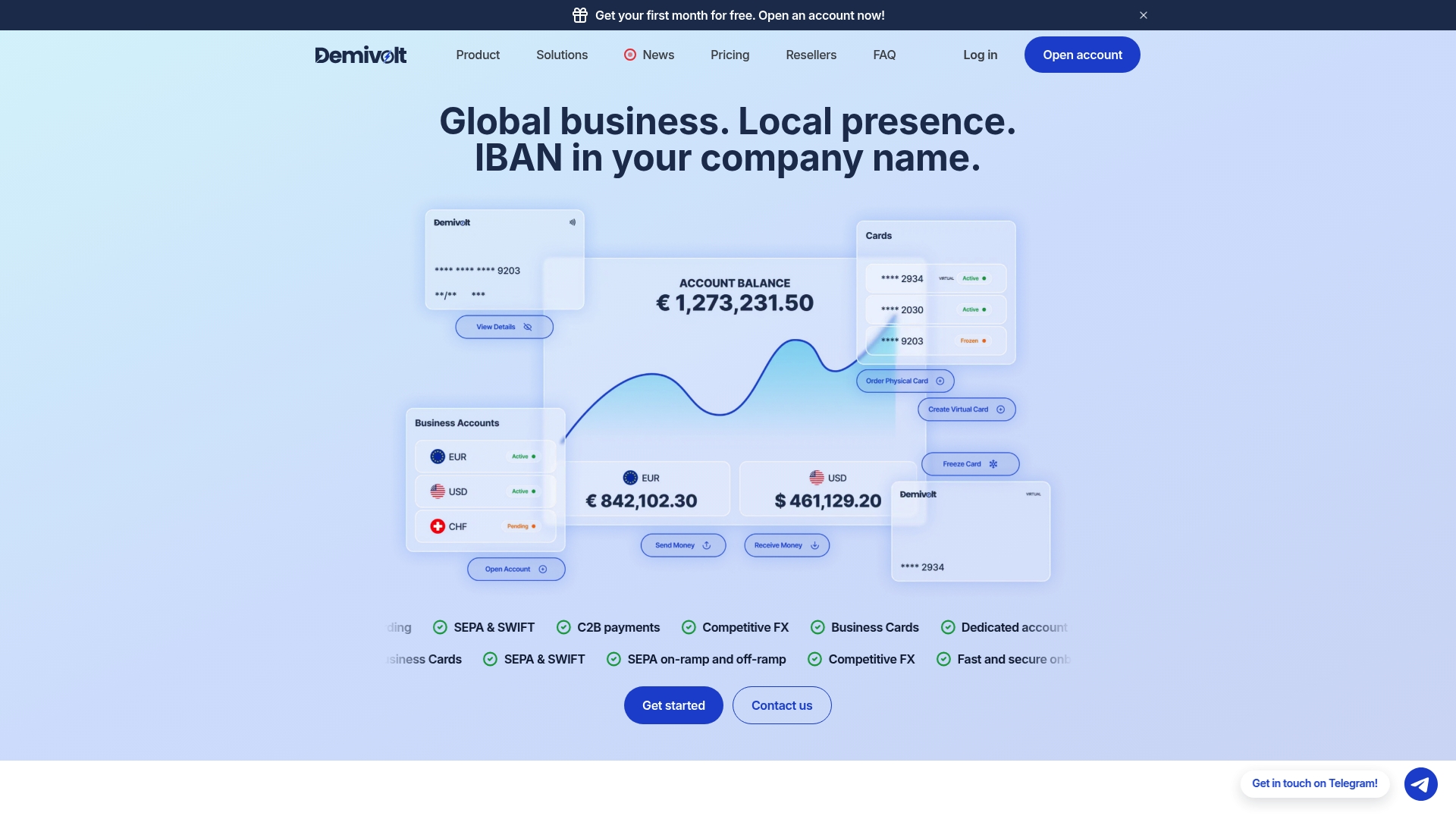
Demivolt is a regulated European fintech platform built for exactly this structure. It lets SMEs open dedicated IBAN accounts, issue virtual cards per account or team, and manage SEPA and SWIFT payments from a single dashboard with role-based access controls. For businesses managing cross-border operations or multiple storefronts, Demivolt’s IBAN validator tool helps verify international account numbers before payments go out, reducing costly errors. You can also explore Demivolt’s free SEPA tools to support compliant, multi-account banking operations across Europe.
FAQ
What are online business multi-account use cases?
Multi-account use cases are specific scenarios where a business operates two or more separate online accounts to isolate risk, segment audiences, or meet platform compliance requirements. Common examples include social media agencies managing client portfolios, e-commerce sellers running regional storefronts, and affiliate marketers testing parallel campaigns.
How do I manage multiple accounts without getting banned?
Each account must have a dedicated proxy, a unique browser profile with distinct device fingerprints, and separate payment credentials. Shared IPs or payment methods link accounts together and trigger automated suspension systems on most major platforms.
When should an SME move from one account to multiple accounts?
Move to a multi-account structure only when a specific operational need, such as audience segmentation or risk isolation, clearly outweighs the added management overhead. SMEs without strict compliance needs are better served by a single account until that threshold is reached.
What is the biggest operational risk in multi-account management?
The biggest risk is operational drift, where accounts managed without standardized processes become inconsistent and neglected. A single management model applied consistently across all accounts prevents the inefficiency that builds when teams improvise different workflows per account.
How does financial account isolation support multi-account strategies?
Separate payment credentials per account prevent financial fingerprinting, which platforms use to link accounts. Using dedicated virtual cards and distinct IBANs for each account or storefront keeps financial identities separate and reduces the risk of cascade account restrictions tied to shared payment data. You can review multi-account management steps to build this structure correctly from the start.